
LATAM developers average B2 English on TOEFL iBT across six countries despite EF EPI national scores ranging from 447 to 560. The tech workforce outperforms general-population benchmarks by 2 to 3 times.
Argentina, Colombia, Mexico, Brazil, Chile, and Costa Rica all score at B2 among their TOEFL-taking populations. Senior engineers in Medellín and Buenos Aires collaborate daily in English with US product teams. Below, you will find country-level EF EPI and TOEFL data, CEFR-to-role mapping, and hiring benchmarks for each major LATAM market.
We source developers from Medellín’s Ruta N district, Buenos Aires’s Distrito Tecnologico, Guadalajara’s tech corridor, and Sao Paulo’s enterprise hubs, each vetted for technical skills, English proficiency, and US work style fit. This guide covers what the data actually means at the hiring-decision level, not the national-average level.
How Do EF EPI and TOEFL Data Map LATAM English Levels for Hiring?
Three frameworks dominate English proficiency measurement in LATAM hiring: EF EPI, TOEFL iBT, and CEFR. The EF EPI 2023 edition analyzed 2.2 million adults on a 0-800 scale across five proficiency bands. TOEFL iBT measures academic and professional English on a 0-120 scale. CEFR maps both into A1-C2 bands that translate directly into hiring decisions.
What Do EF EPI LATAM Scores Actually Tell a Hiring Manager?
EF EPI scores reflect self-selected adult samples biased toward younger, urban, digitally connected individuals. They do not represent the developer labor pool. Mexico scores 447 (“Very Low”), but that number averages retail workers, students, and civil servants alongside engineers. A senior React developer in Guadalajara operates in a different English environment entirely.
EF EPI 2023 Full LATAM Rankings
| Country | Global Rank (of 113) | EF EPI Score | Proficiency Band |
|---|---|---|---|
| Argentina | 28 | 560 | High |
| Honduras | 36 | 544 | Moderate |
| Costa Rica | 38 | 536 | Moderate |
| Uruguay | 39 | 533 | Moderate |
| Chile | 45 | 526 | Moderate |
| Brazil | 58 | 505 | Moderate |
| Colombia | 75 | 480 | Low |
| Mexico | 89 | 447 | Very Low |
Argentina (#28, “High”) and Colombia (#75, “Low”) sit 80 points apart at the general-population level. Honduras climbed +14 points since 2022. Mexico dropped -8 points into “Very Low” for the first time in 2023.
What the tech sector looks like inside these numbers
National EF EPI averages undercount the English available in LATAM’s developer pool. Tech workers consume English through documentation, Stack Overflow, GitHub, and daily US team collaboration.
| Source | Key Finding |
|---|---|
| Global hiring platform data (2023) | Tech workers in LATAM are 2-3 times more likely to hold advanced English skills than the general workforce |
| Vetted developer marketplace data (2023) | Over 70% of vetted LATAM developers possess business-level English (B2+) |
| Developer marketplace data (2024) | 65% of pre-vetted LATAM developers demonstrate advanced or fluent English |
| Nearshore industry reports (2023) | 10-15% of the total LATAM developer pool holds B2+; that rate exceeds 50% among mid and senior developers seeking international roles |
Colombia’s EF EPI score of 480 does not describe the senior full-stack engineers in Medellín who collaborate with US product managers on Slack daily.
Which TOEFL and CEFR Benchmarks Actually Matter for Hiring?
B2 is the practical proficiency floor for synchronous collaboration with US engineering teams. Below B2, a developer handles async communication but struggles in live standups and unscripted client calls. C1 unlocks leadership: running sprint ceremonies, presenting to stakeholders, mentoring across language boundaries.
TOEFL iBT Average Scores by Country (2022, ETS)
Argentina: 89 (B2) | Chile: 89 (B2) | Costa Rica: 88 (B2) | Brazil: 85 (B2) | Mexico: 81 (B2) | Colombia: 81 (B2)
All six countries average at B2 among their TOEFL-taking populations. This confirms the tech-bubble thesis: the segment relevant to US hiring managers clusters at B2 regardless of national-level EF EPI averages.
| CEFR Level | TOEFL iBT Range | Workplace Capability | Typical Role Fit |
|---|---|---|---|
| B1 | 60-78 | Handles routine communication; struggles with complex debates or leading client calls | Backend, DevOps, data engineering (async-first teams) |
| B2 | 79-93 | Participates actively in technical discussions; writes clear documentation; handles client-facing communication | Frontend, product engineering, mid-level IC roles |
| C1 | 94-109 | Communicates fluently; leads negotiations; presents to stakeholders | Engineering managers, tech leads, principal engineers |
| C2 | 110-120 | Near-native proficiency | Executive roles, VP-level leadership |
Setting a blanket C1 requirement shrinks the available talent pool by 40-50% and prices in a premium the role does not require. For compensation benchmarks across these markets, see our LATAM Developer Salary Guide.
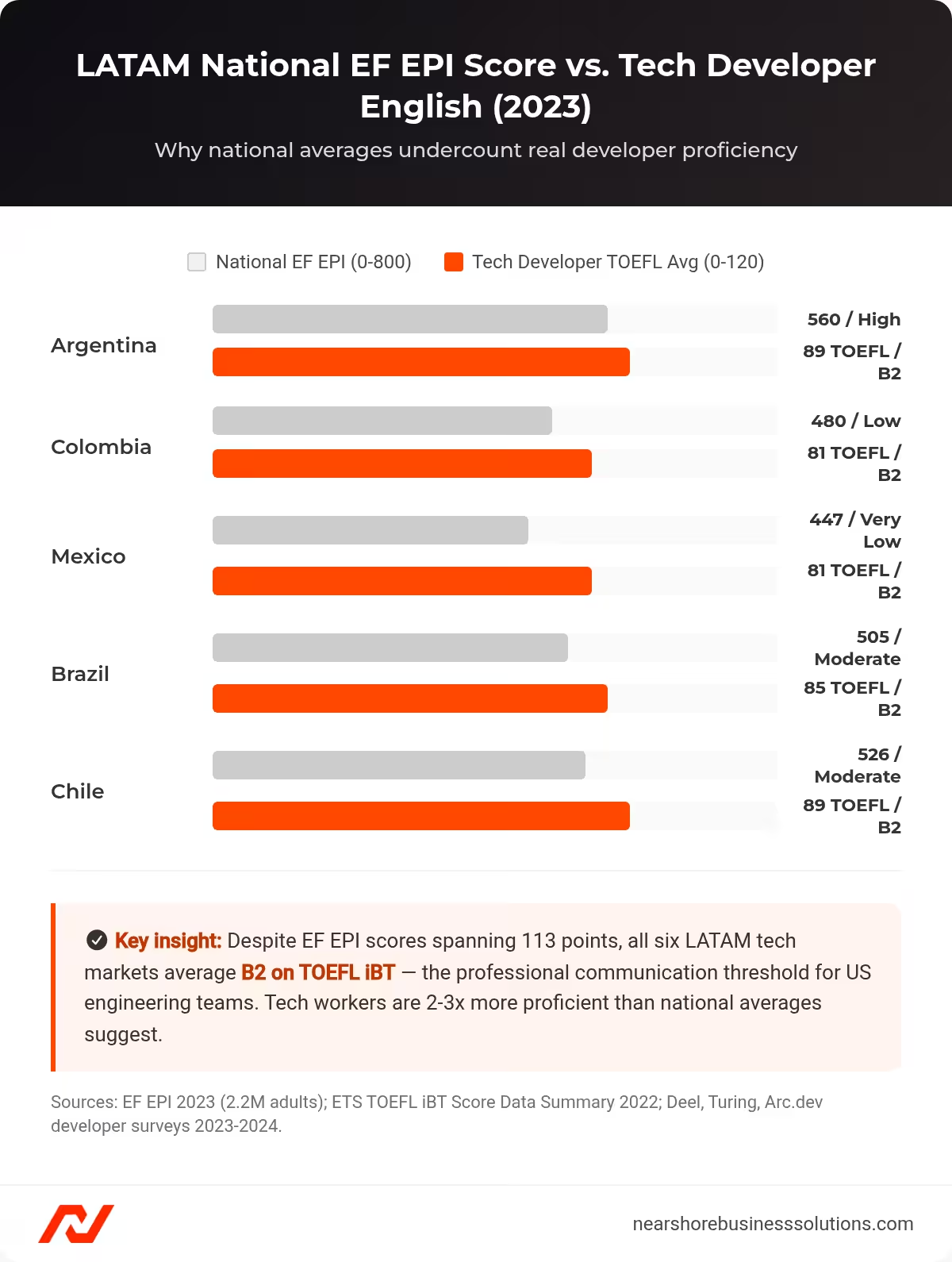
EF EPI national scores vs. TOEFL developer averages across six LATAM tech markets.
Which LATAM Countries Have the Strongest English for Tech Hiring?
LATAM’s six primary tech markets range from Argentina (B2-C1 tech median) to Brazil (B1 general median, B2 in Sao Paulo and Florianopolis hubs). The country breakdown below uses EF EPI rank, TOEFL average, pool size, and estimated tech CEFR median as the basis for hiring decisions. National averages are shown for context only.
| Country | EF EPI Rank | TOEFL Avg | Developer Pool | Est. Tech CEFR Median | Key Context |
|---|---|---|---|---|---|
| Argentina | #28, High | 89 | 140k-150k | B2-C1 | Highest English floor in South America |
| Costa Rica | #38, Moderate | 88 | 20k-25k | B2 | Long US BPO history; small pool |
| Chile | #45, Moderate | 89 | 60k-70k | B2 | Small, high-quality pool |
| Colombia | #75, Low | 81 | 120k-140k | B1-B2 | Rapidly improving via SENA |
| Brazil | #58, Moderate | 85 | 600k-750k | B1 (B2 in hubs) | Massive pool, Portuguese-dominant |
| Mexico | #89, Very Low | 81 | 250k-300k | B1-B2 | Timezone advantage offsets lower national English score |
Global context: Argentina at 560 competes directly with the Philippines (578) while outperforming India (504). Argentina trails Poland (600) and Romania (598) but remains the only LATAM country reaching the same proficiency band as top Eastern European markets. See how these markets compare in our guide to hiring tech talent in Latin America. If you are ready to act on this data, see our hiring software developers in Latin America page for role-specific vetting criteria.
How Strong Is Argentina’s English for Software Development?
Argentina’s English floor is the highest in South American tech, with over 85% of Argentine engineering graduates who pass technical assessments also clearing the B2+ threshold. This is the best pass-through rate in the region, per TripleTen. English instruction is mandatory in Argentine public and private schools as a core subject with dedicated daily hours. Argentines consume English-language media without dubbing more frequently than peers in Bogota or Sao Paulo. Over 15,000 students graduate annually from technology and engineering programs. Chronic peso devaluation makes USD-denominated salaries significant, creating a motivated talent pool. Senior engineers cost roughly 45% of the US equivalent while maintaining identical timezone overlap with US East and Central.
Universities producing English-proficient developers include UBA (Universidad de Buenos Aires), ITBA (Instituto Tecnologico de Buenos Aires), UTN (Universidad Tecnologica Nacional), and Universidad Austral. Globant, Mercado Libre, and Auth0 built large engineering teams here before expanding internationally. This is evidence of the talent base depth.
How Is Colombia Closing the English Proficiency Gap?
Colombia’s 40-point EF EPI climb from 2021 to 2023 (from 440 to 480) is the steepest two-year improvement among the top six LATAM nearshoring countries, per EF EPI data. SENA’s English Dot Works program delivers 10 CEFR-mapped levels of virtual English instruction with free access and no admissions barrier. SENA reported over 5 million enrollments in virtual English courses since inception. Government investment spans two decades: the Programa Nacional de Bilingüismo (2004-2019), Colombia Bilingüe (2015-2018), and Go Colombia (2023-present). Medellín’s Ruta N innovation agency partnered with SENA for targeted English and tech training. ProColombia now cites the growing bilingual talent pool as a primary competitive advantage in international recruitment.
For interviews with LATAM candidates, use our guide to interviewing remote candidates in Latin America to structure proficiency assessments.
How Do Mexico, Brazil, Chile, and Costa Rica Compare on English?
Mexico plays a timezone card no other LATAM country matches: full-day overlap with US Central. The gap between Mexico’s national EF EPI score of 447 and tech-hub reality in Guadalajara and Mexico City is the widest in the region. Developers from ITESM (Tecnologico de Monterrey) and UNAM operate at B2 within the tech ecosystem despite the national average. Brazil has the largest pool (600,000-750,000 developers) but Portuguese dominance means English must be explicitly tested. Sao Paulo and Florianopolis concentrate B2+ talent. Engineers from USP (Universidade de Sao Paulo) and UNICAMP cluster in these hubs. Chile delivers a statistical anomaly: its TOEFL average of 89 ties Argentina’s despite sitting 17 positions lower in EF EPI rankings, suggesting strong English investment among those pursuing tech careers. Costa Rica leverages two decades of US BPO operations that built English training infrastructure. A 2023 Accelirate report documented a fintech client saving $1.2 million in year one by augmenting its US team with senior developers from Costa Rica and Colombia.
What Do LATAM Tech English Levels Look Like by Engineering Role?
Role determines the English demand threshold. Treating all roles as requiring the same proficiency is the most common sourcing mistake CTOs make. The right floor varies by communication surface: how much of the role touches live stakeholder interaction versus asynchronous system work.
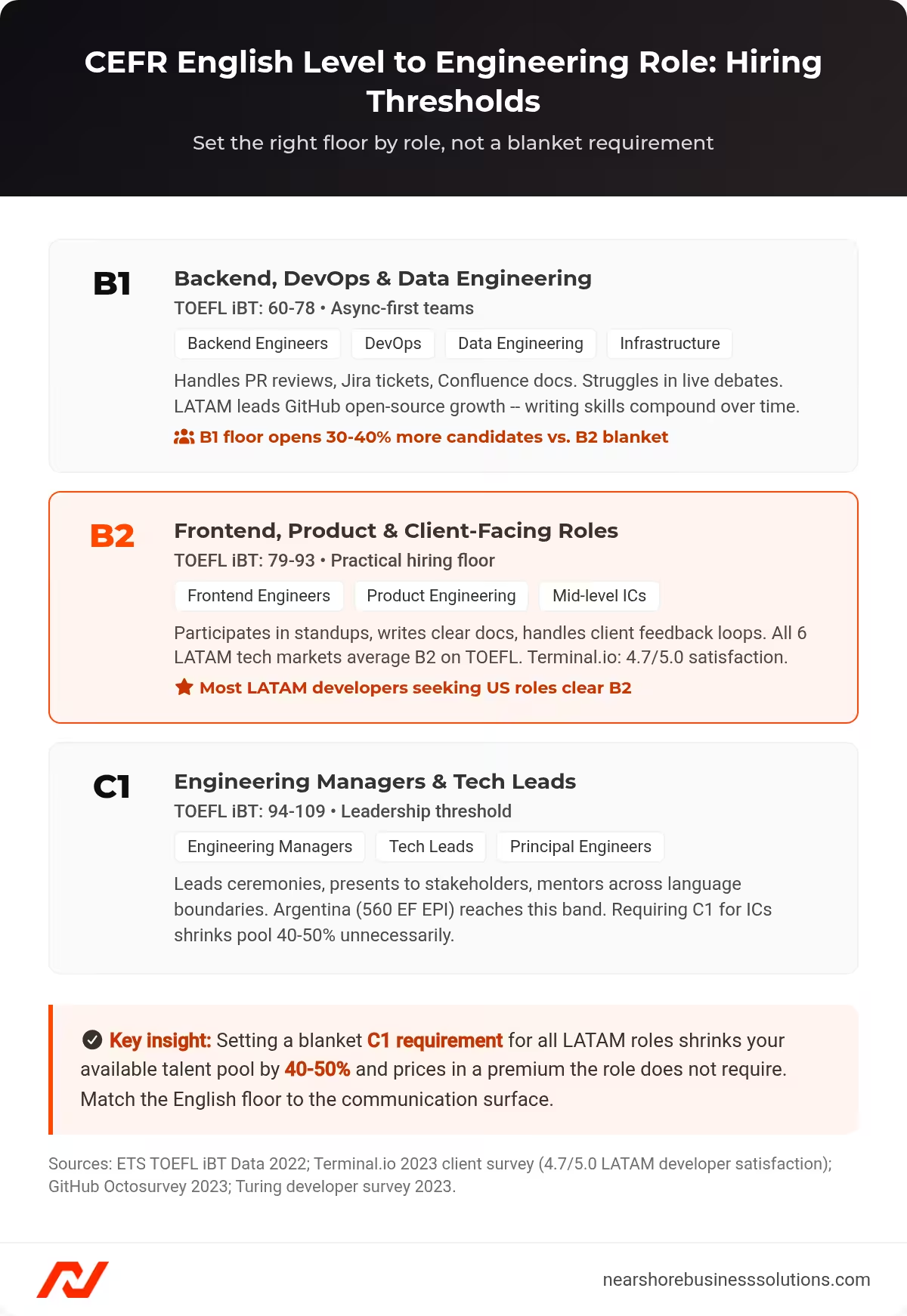
CEFR English level to engineering role map with TOEFL iBT ranges and talent pool impact.
Which Backend and Infrastructure Roles Work at B1 English?
Backend engineers, DevOps engineers, and data engineers spend the majority of their hours interacting with systems, not stakeholders. B1 English ships production code in these roles. TOEFL iBT subscores reveal a consistent pattern across LATAM: reading and listening scores outpace speaking scores in every country. An infrastructure engineer who spent five years reading AWS documentation and parsing Stack Overflow may read at C1 while speaking at B1. In a role where 80% of communication flows through pull request comments, Jira tickets, and Confluence pages, that imbalance is adequate. GitHub’s 2023 Octosurvey found Latin America was the fastest-growing region for open-source contributions. That participation compounds written English proficiency year over year.
Setting the floor at B1 for backend, DevOps, and data engineering roles with async-first communication norms opens access to roughly 30-40% more candidates than a blanket B2 requirement, with no performance penalty in output-oriented infrastructure work.
Why Is B2 the Real Proficiency Floor for Frontend and Client-Facing Roles?
Frontend, product, and client-facing roles require B2 because the communication surface inverts when a developer’s work becomes visible to non-engineers. A B1 developer hearing “I’m not sure the loading state communicates enough” is limited to agreement or simple clarification. A B2 developer responds: “We could add a skeleton screen, but that adds animation complexity. Would a text-based status message work for the MVP?” The B2 response validates feedback, proposes a tradeoff, and scopes the solution. That is the difference between receiving instructions and participating in product decisions.
US teams operate at the low-context end of the communication spectrum, as Erin Meyer’s The Culture Map documents. Intent and disagreement must be stated explicitly. A B1 speaker navigating high-context cultural habits while interfacing with low-context US stakeholders faces a double translation burden. B2 provides enough linguistic headroom to handle both simultaneously. A 2023 client survey of nearshore engagements found LATAM developers received an average satisfaction score of 4.7 out of 5.0 for communication and collaboration, compared to 4.2 out of 5.0 for developers in other global regions. When proficiency thresholds are correctly matched to roles, LATAM teams integrate exceptionally well into US engineering organizations.
Frequently Asked Questions About LATAM Tech English Levels
How do I assess a LATAM developer’s English proficiency in the hiring process? Use a structured interview with open-ended technical questions, followed by a written async exercise (technical summary or Slack-style status update). TOEFL and CEFR scores from recent tests (within two years) provide a standardized benchmark. Combine both: live interview for speaking, async exercise for writing.
Does English proficiency affect developer output quality? Not for backend and infrastructure roles with async-first workflows. GitHub’s 2023 Octosurvey data shows LATAM leads in open-source contribution growth. For client-facing and product roles, proficiency directly affects sprint velocity and stakeholder alignment. B2 is the documented threshold where output quality and communication quality align.
Which LATAM country has the best English for tech hiring? Argentina has the highest English floor in South American tech, with 85% of engineering candidates who pass technical screens also clearing B2+ per TripleTen data. Costa Rica and Chile follow at B2 median for the tech-seeking population.
Is Colombia’s low EF EPI score a concern for hiring? No, if you are hiring senior developers from Medellín and Bogota. Colombia’s 40-point EF EPI improvement from 2021-2023 is the steepest in the region. The EF EPI national score (480) covers the full adult population. Senior Colombian developers actively seeking international roles average B1-B2, with the top quartile reaching C1.
Does Mexico’s “Very Low” EF EPI score mean Mexican developers have poor English? Not for senior tech roles. Mexico’s 447 national score covers 130 million people across all industries. Senior developers in Guadalajara and Mexico City trained through ITESM and UNAM operate at B2 in the tech ecosystem. Mexico’s full-day US Central timezone overlap compensates for any communication friction in early-stage relationships.
How should I set English requirements by role? Set B1 minimum for backend, DevOps, and data engineering roles on async-first teams. Set B2 minimum for frontend, product, and any client-facing roles. Reserve C1 requirements for engineering manager and tech lead positions where stakeholder presentations and sprint facilitation are core responsibilities.
Can I hire LATAM developers without English proficiency testing? You can, but you add risk. The 2-3x multiplier between national EF EPI averages and actual tech-workforce proficiency means candidates vary widely. A structured 30-minute spoken assessment in the final round prevents the mismatches that cause early departures.
Ready to Hire LATAM Developers Pre-Screened for English?
Nearshore Business Solutions sources and vets developers from Medellín’s Ruta N district, Buenos Aires’s Distrito Tecnologico, Guadalajara, and Sao Paulo’s enterprise hubs. Every candidate clears a spoken English assessment before your interview. You only see developers who meet your role’s CEFR threshold.
Every placement includes a 90-day replacement guarantee. You receive the first pre-vetted candidates within 3 business days.
Start hiring LATAM engineers pre-screened for B2+ English. Book a 30-minute consultation to discuss your role requirements and receive shortlisted candidates.