
Hire from Argentina or Colombia for 60-65% cost savings and access to 100,000+ experienced developers with strong English skills.
Argentina pays senior developers $68k-$105k annually and excels in AI and Python. Colombia offers timezone alignment with the US East Coast and specialization in cloud and mobile applications.
This comparison examines talent pool sizes, salary expectations, technical specializations, and macroeconomic factors. You’ll find the information you need to choose the right market for your engineering needs.
What Are Argentina and Colombia as Tech Hubs for Engineering Talent?
Argentina commands 45% of Latin America’s startup ecosystem value. The country has built 11 unicorns: MercadoLibre, Globant, and Auth0. These companies prove Argentina has mature tech infrastructure and can scale globally.
Colombia operates at a different scale. It has over 1,350 startups and 3 unicorns, including Rappi. Colombia ranks fourth in the region’s startup ecosystem. This gap matters for hiring strategy and risk management.
Why Are Companies Choosing Between Argentina and Colombia for Tech Hiring?
Seventy percent of American enterprises cannot fill specialized software engineering roles domestically. Nearshoring to Latin America is the most common solution. Argentina and Colombia offer overlapping time zones, cultural alignment, and English proficiency. But their talent markets differ in depth and specialization.
How Do the Talent Pool Sizes Compare Between Argentina and Colombia?
Both countries offer large talent pools, but their sizes and growth rates differ significantly. Argentina leads in overall developer count and growth velocity, while Colombia is expanding rapidly from a smaller base.
How many software developers does Argentina have?
Argentina has 115,000 to 167,000 professional developers. The exact count varies based on whether you include self-taught programmers and part-time contributors.
The market grew 41% year-over-year in new programmer registrations. That’s the highest growth rate in Latin America. GitHub contributors from Argentina also increased 41% during the same period. This shows strong educational infrastructure and active developer participation.
How many software developers does Colombia have?
Colombia has 85,000 to 150,000 developers. The market expanded from 62,000 in 2021 to over 85,000 by mid-2024. GitHub contributors increased 33% during this period.
Colombia’s growth rate trails Argentina’s but remains strong. The smaller developer base means less competition for talent in specialized roles. However, fewer senior engineers are available for highly complex projects.
What Are the Average Software Developer Salaries in Argentina and Colombia?
Both countries offer significant cost savings compared to US rates. Here’s the breakdown by experience level:
| Seniority Level | Argentina (USD/year) | Colombia (USD/year) | US Equivalent | Savings vs US |
|---|---|---|---|---|
| Junior (0-2 yrs) | $20,000 – $30,000 | $22,000 – $32,000 | $90,000 – $115,000 | 70-75% |
| Mid-Level (3-5 yrs) | $38,000 – $55,000 | $40,000 – $58,000 | $130,000 – $165,000 | 65-70% |
| Senior (6+ yrs) | $68,000 – $105,000 | $72,000 – $110,000 | $190,000 – $260,000 | 50-65% |
| Tech Lead/AI Specialist | $110,000 – $145,000 | $105,000 – $135,000 | $230,000+ | 45-55% |
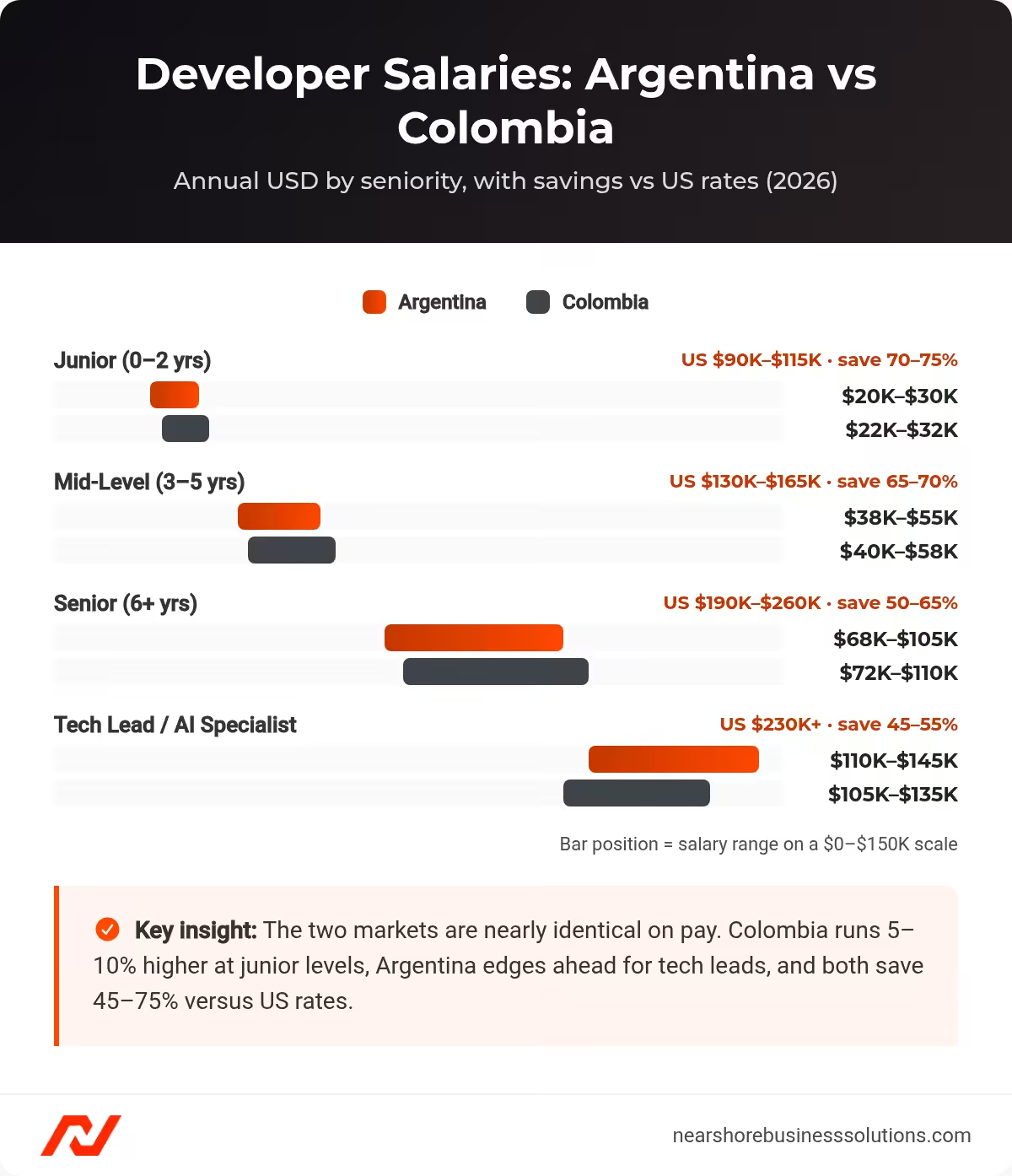
Developer salary ranges by seniority: Argentina versus Colombia versus US rates.
Argentina has become the highest-paying market in Latin America for senior technical roles. Colombia’s rates run 5-10% higher at junior levels but converge with Argentina at senior positions. Your cost advantage compresses from 70% at junior levels to 50-55% for tech leads.
The narrower gap at senior levels indicates competitive pressure from U.S. remote hiring in both markets. Colombia’s rates carry less volatility than Argentina’s because they’re less influenced by peso devaluation cycles. Budget planning becomes more straightforward with Colombia, though Argentina offers slightly lower absolute costs for senior talent.
Which Country Offers More Cost-Effective Engineering Talent?
Fully loaded costs for a mid-level engineer in Latin America average $65,000 USD versus $160,000 for U.S. equivalents. This 60% discount erodes gradually as regional salaries track 6-9% annual inflation in USD terms.
For a detailed breakdown of hiring costs in Latin America, we’ve compiled comprehensive salary data across all experience levels.
Three-year projections show convergence between the two countries:
| Year | Argentina (Senior, Loaded) | Colombia (Senior, Loaded) | US Equivalent | Argentina Advantage |
|---|---|---|---|---|
| 2026 | $115,000 | $112,000 | $260,000 | -$3,000 |
| 2027 | $123,050 | $120,960 | $273,000 | -$2,090 |
| 2028 | $131,664 | $130,637 | $286,650 | -$1,027 |
By year three, the cost gap narrows to under $1,100 per engineer. Currency volatility in Argentina introduces budget risk that Colombia avoids. Your decision hinges on whether you prioritize immediate cost savings or predictable budgeting over a multi-year engagement.
How Does English Proficiency Compare Between Argentina and Colombia?
What is Argentina’s EF EPI ranking?
Argentina ranks 28th-29th globally on the EF English Proficiency Index. The country holds consistent placement in the “High Proficiency” band and second position in Latin America. This translates to engineers who handle technical documentation, participate in architecture discussions, and communicate blockers without translation overhead.
What is Colombia’s EF EPI ranking?
Colombia’s national average places it 76th-80th globally, landing in “Low” to “Moderate” proficiency categories. This number misleads because it includes rural populations with no exposure to technical English.
How does English proficiency impact collaboration with US companies?
Argentina’s high proficiency enables nuanced technical discussions with minimal friction. Engineers parse API documentation, contribute to pull request reviews, and join sprint planning without language barriers slowing velocity.
Colombia’s tech hubs in Bogotá and Medellín demonstrate significantly higher proficiency than the national average suggests. Many Colombian universities now mandate international English exams for STEM graduation. You’ll find English competency among developers in these cities comparable to Argentina’s, though screening becomes more important during hiring.
The practical difference: Argentina gives you broader talent pool access with reliable English skills. Colombia requires tighter geographic focus on major cities and stricter English assessment during recruitment.
What Are the Time Zone Differences Between Argentina, Colombia, and the United States?
Here’s how each country aligns with US operations:
| Factor | Argentina | Colombia |
|---|---|---|
| Time Zone | GMT-3 | GMT-5 (EST) |
| EST Overlap | ~6 hours | ~8 hours (100% alignment) |
| PST Overlap | ~3-4 hours | ~5-6 hours |
| Flight from NYC | 10+ hours | ~5 hours |
| London Offset | -3 hours (bridge US/EU) | -5 hours |
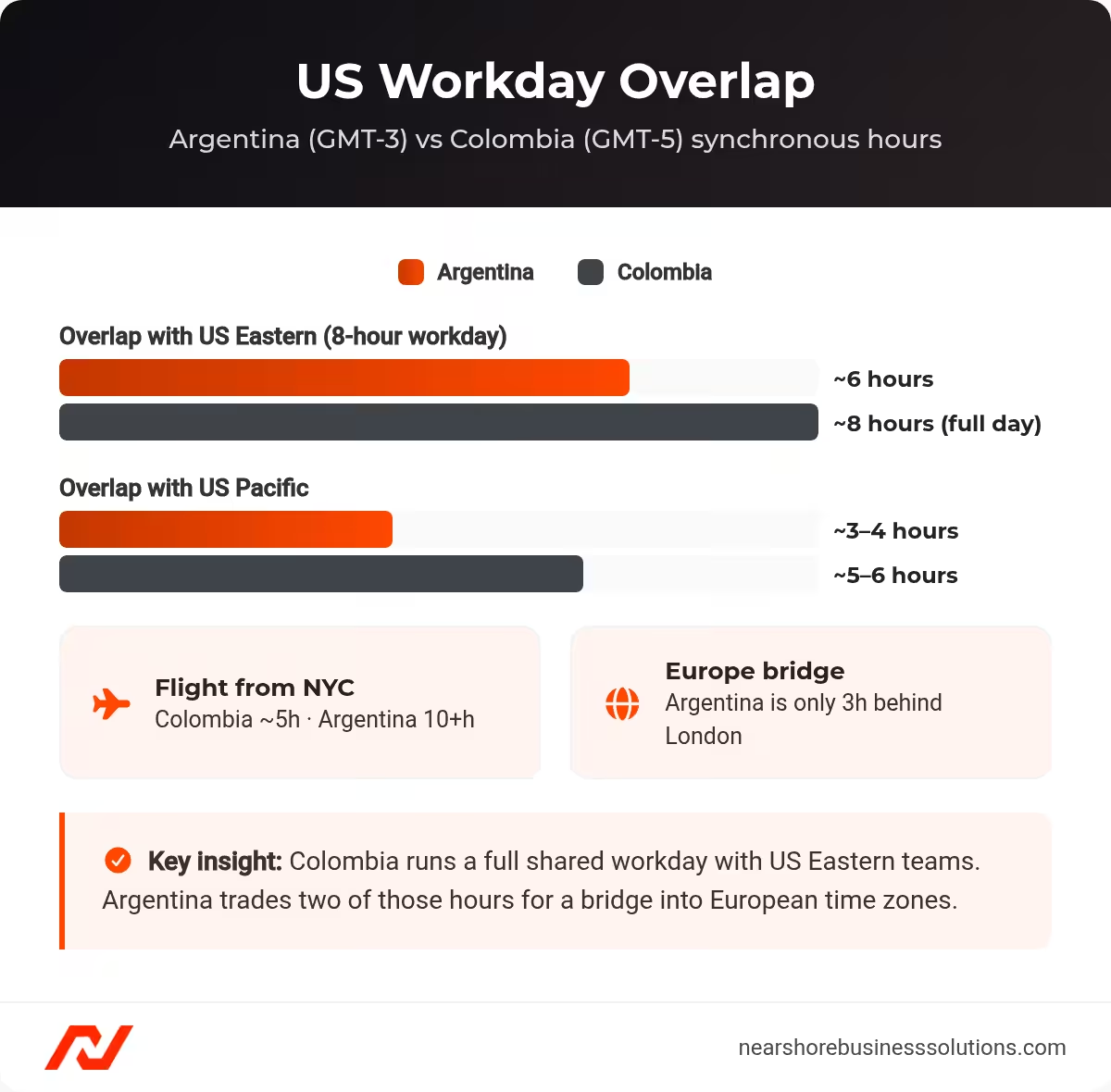
Synchronous workday overlap with US time zones: Argentina versus Colombia.
Colombia delivers near-perfect synchronization with U.S. Eastern Time. Your engineers start when your team starts, join standups in real-time, and remain available through end-of-day escalations. Argentina’s 2-hour offset forces you to shift morning meetings or accept that your Buenos Aires team misses the first hours of your workday.
The timezone advantage in Colombia reduces coordination overhead and enables true real-time collaboration. Argentina’s offset becomes manageable with async workflows but creates friction for teams that rely on synchronous communication. Argentina’s proximity to London (only 3 hours behind) provides an advantage if you run distributed teams across U.S. and European operations.
What Programming Languages and Technologies Are Developers Skilled In?
What Programming Languages and Technologies Are Argentine Developers Skilled In?
Argentine developers specialize in:
- Python – AI research, data science, and machine learning pipelines
- .NET – Enterprise application development and backend systems
- Machine Learning – Deep learning model architecture and ML infrastructure
- SQL – Database optimization and advanced analytics
Argentina ranks high globally in Data Science and AI capabilities on platforms like Kaggle and HackerRank. You’ll find engineers who can architect machine learning pipelines, not just implement pre-built models.
The engineering culture emphasizes creativity and independence. Argentine developers expect autonomy in technical decisions and push back on prescriptive requirements. This works well for teams seeking innovation but creates friction if you need strict adherence to established patterns without discussion.
What Programming Languages and Technologies Are Colombian Developers Skilled In?
Colombian developers specialize in:
- Java – Enterprise backend systems and microservices
- JavaScript – Full-stack web development (React, Node.js, Angular)
- Mobile Development – iOS and Android native applications
- PHP – Legacy system maintenance and WordPress development
- Ruby – Rails applications and API development
- Cloud-Native – AWS, Azure, and containerized architectures
This specialization pattern reflects industry demand from Colombian startups and multinational subsidiaries operating in Bogotá and Medellín. You’ll find strong mobile engineering talent for iOS and Android, plus full-stack developers comfortable with modern JavaScript frameworks. The PHP and Ruby expertise supports legacy system maintenance. This is useful if you’re modernizing older codebases.
How Do Technical Skill Levels Compare Between Argentina and Colombia?
How does Argentina rank in global developer skill assessments?
Argentina functions as a regional center for open-source collaboration. Seventy-six percent of Argentine developers integrate AI tools like GitHub Copilot into daily workflows. That’s higher adoption than most Latin American markets. The Latin American developer community ranks among the fastest-growing globally, with Argentina leading this expansion.
Argentine engineers contribute actively to open-source projects, which signals comfort with distributed collaboration and modern development practices. The high AI tool adoption indicates developers who optimize their workflows and stay current with tooling trends.
How does Colombia rank in global developer skill assessments?
The IMD World Talent Report ranks Colombia’s available skilled workforce third globally. Colombia outperforms larger nations including Brazil and Chile in this assessment. Colombian developers receive consistent recognition for proactive communication and adherence to Western business standards.
This ranking reflects education system outputs and workforce readiness rather than raw technical capability. Colombian engineers demonstrate strong project management discipline and structured communication. These qualities are valuable for teams that need predictable delivery cadences. Argentina’s developers may bring deeper theoretical knowledge, but Colombia’s workforce integrates more smoothly into established enterprise processes.
What Are the Major Tech Companies and Startup Ecosystems?
What Are the Major Tech Companies with Operations in Argentina?
Argentina has produced 11 unicorns. MercadoLibre (e-commerce platform), Globant (digital transformation), and Auth0 (identity management platform) lead the ecosystem. Buenos Aires concentrates the majority of these unicorns within its metro area.
This concentration creates a talent flywheel. Engineers gain experience at billion-dollar companies. They then move into your hiring pipeline. You’re recruiting from developers who’ve built infrastructure handling millions of users. That’s different from developers who worked only at regional service shops.
What Are the Major Tech Companies with Operations in Colombia?
Colombia has produced 3 unicorns: Rappi (super-app for delivery and finance), Bold (merchant acquiring), and RappiPay (approved as a digital bank in 2022).
Rappi dominates Colombia’s tech ecosystem. The company’s expansion from delivery into financial services mirrors regional super-app trends. Engineers from Rappi bring mobile-first architecture experience. They understand high-transaction-volume systems.
How many unicorns does Argentina have?
Argentina has 11 unicorns. This 3.7x advantage over Colombia signals ecosystem maturity. More unicorns mean more experienced technical leadership, more battle-tested architectural patterns, and deeper networks of senior engineers who’ve solved scaling challenges.
How many unicorns does Colombia have?
Colombia has 3 unicorns. The smaller count doesn’t indicate lower quality talent. It reflects a younger ecosystem with fewer companies reaching billion-dollar valuations. Colombian startups remain concentrated in specific verticals like delivery, fintech, and logistics rather than spanning the broader technology landscape Argentina covers.
What is the venture capital investment in Argentina?
Argentine startups attracted roughly $418 million in venture capital in 2024 according to LAVCA data, with Ualá’s $330 million round accounting for most of that total. Argentina was one of only three Latin American countries where VC investment grew in 2024, and its 11 unicorns and 45% share of Latin America’s startup ecosystem value reflect deep historical investment.
What is the venture capital investment in Colombia?
Colombian startups raised roughly $350-500 million across 112 deals in 2024 per LAVCA data, making Colombia the third-largest VC market in Latin America behind Brazil and Mexico and one of the few in the region to grow year over year. That activity is concentrated in fewer companies than Argentina’s more distributed ecosystem.
What Are the Main Tech Hubs in Argentina?
Why is Buenos Aires a leading tech hub?
Buenos Aires functions as Argentina’s primary economic and technological engine. The city offers a “European” lifestyle that attracts senior talent and digital nomads. You’ll find walkable neighborhoods, strong cafe culture, and cultural amenities that retain developers who could work remotely for higher-paying U.S. companies.
Learn more about hiring developers in Argentina and Buenos Aires’ role as a tech powerhouse.
High density of SaaS and startup activity concentrates in Buenos Aires. You’ll find coworking spaces, technical meetups, and established engineering communities that accelerate hiring and onboarding. The infrastructure supports remote work with reliable internet and modern office spaces if you need physical presence.
What makes Córdoba an important tech city in Argentina?
Córdoba operates as a university-centric city focused on engineering and software architecture. The National University of Córdoba produces technically strong graduates with solid computer science fundamentals.
Córdoba serves as a secondary hub offering high-quality talent at slightly lower operational costs than Buenos Aires. Salaries run 10-15% below capital rates while maintaining comparable technical capabilities. This matters if you’re building a 20+ person team and cost optimization influences headcount decisions. The tradeoff: smaller talent pool and less developed startup ecosystem compared to Buenos Aires.
What Are the Main Tech Hubs in Colombia?
Why is Bogotá a leading tech hub?
Bogotá concentrates the largest developer population in Colombia with an estimated 85,000+ engineers. The city holds the highest density of SaaS and FinTech startups in the country.
Internet infrastructure delivers standard speeds of 158 Mbps with 88%+ consistency. This reliability supports video conferencing, cloud development environments, and real-time collaboration without connectivity issues.
For more information on hiring developers in Colombia, Bogotá offers one of the best talent pools in Latin America.
What makes Medellín an important tech city in Colombia?
Medellín transformed through Ruta N, a government-backed innovation district. This initiative concentrated tech companies, accelerators, and talent programs in a defined geographic area. The city ranks as a global favorite for remote work.
Medellín’s tech community emphasizes collaboration and work-life balance. Professionals choose it for quality of life. The spring-like climate and mountain views are major draws. The lifestyle retention factor matters when competing for talent. Developers choose Medellín over US relocation because they get comparable quality of life at lower costs.
How does Cali contribute to Colombia’s tech ecosystem?
Cali is an emerging hub rather than an established one. The city grew from 104 to 134 startups between 2023 and 2024, about 8% of Colombia’s total, and climbed 65 spots in StartupBlink’s 2026 global ecosystem index to rank third among Colombian cities. Local universities such as Universidad del Valle have produced more than 7,000 systems-engineering graduates over the past decade, but Cali hasn’t yet reached the tech hub status of Bogotá and Medellín.
How Do Government Support and Incentives Compare for Tech Companies?
What government programs support tech development in Argentina?
Argentina’s Knowledge Economy Law (Ley de Economía del Conocimiento) provides:
- 10-year fiscal stability guarantee protecting against tax increases
- Income tax reductions up to 60% for qualified service exporters
- Social security tax credits through partial reimbursement of employer contributions
- VAT exemptions for service exports
- Corporate income tax reduced to 15% (versus standard rates)
- Foreign tax credits regardless of double tax treaty existence
This structure significantly reduces your cost of employment for tech workers. A $50,000 salary becomes more competitive when payroll taxes drop by as much as 70% under Argentina’s Knowledge Economy Law.
“Argentina Programa 4.0” aims to train 500,000 developers by 2030. This government-funded initiative expands the talent pipeline but creates uncertainty around quality control and skill standardization across different training programs.
What government programs support tech development in Colombia?
ProColombia manages Free Trade Zones and innovation-friendly policies that reduce operational friction for foreign companies. MinCiencias “Call 970” offers a 50% tax credit or 30% tax discount on qualified R\&D investments in 2026.
Corporate income tax sits at 35% base rate, significantly higher than Argentina’s 15% for qualified tech firms. This 20-point gap directly impacts your after-tax cost structure if you’re establishing a legal entity rather than contracting through an employer of record.
Colombia operates a regulatory sandbox for FinTech innovations, accelerating product launches in financial services. The 2025 Financing Law (enacted) aims to raise roughly $7 billion USD, with ongoing implementation throughout 2026.
Argentina offers stronger tax incentives for tech companies. Colombia provides more stable regulatory environment but higher base tax rates. Your entity structure determines which regime benefits you more.
What Are the Educational Systems Like for Producing Engineering Talent?
How many STEM graduates does Argentina produce annually?
Industry estimates put Argentina’s output at roughly 20,000 to 27,000 IT and STEM graduates annually, feeding a developer pool estimated at well over 100,000. That density comes from a public education system historically rooted in fundamental sciences and engineering. Universities like Universidad de Buenos Aires offer tuition-free education, creating broad access to technical degrees without the debt burden that limits U.S. graduate pools.
How many STEM graduates does Colombia produce annually?
Colombia produces an estimated 13,000 to 15,000 software and IT engineering graduates per year and ranks fourth in Latin America for the share of graduates in STEM fields. Output keeps rising through AWS and Oracle alliances that fund curriculum development and student training. Universities like Universidad de los Andes and EAFIT maintain partnerships with Microsoft and Google, integrating industry certifications into degree programs.
Which country has stronger computer science programs?
Argentina’s robust public education system emphasizes theoretical foundations. Universities like Universidad de Buenos Aires (UBA), Instituto Tecnológico de Buenos Aires (ITBA), and Universidad Austral produce graduates with strong algorithmic thinking and mathematical reasoning. These skills are valuable for complex system design and research-oriented roles.
Colombia’s education system aligns more directly with industry needs. Universidad de los Andes and Universidad EAFIT partner with global tech leaders like Microsoft and Google. Students gain hands-on experience with enterprise tools and cloud platforms before graduation. This produces job-ready developers who require less onboarding time.
Your choice depends on role requirements. Hire from Argentina for roles requiring algorithmic sophistication or novel problem-solving. Hire from Colombia for roles requiring immediate productivity with established tech stacks.
What Are the Labor Laws You Should Know When Hiring?
What are the mandatory benefits in Argentina?
Mandatory benefits typically run 15-25% of gross salary. Employer cost calculation includes gross salary plus mandatory benefits plus payroll taxes, though Law 27.506 reduces payroll taxes for qualified tech companies.
This loaded cost multiplier affects your true cost per engineer. A $50,000 gross salary becomes $57,500-$62,500 when you factor in mandatory benefits, before considering reduced payroll taxes under the Knowledge Economy Law.
How many paid vacation days are required in Argentina?
Article 150 of Argentina’s Employment Contract Law (Ley de Contrato de Trabajo) sets paid vacation by seniority: 14 calendar days for employees with under five years of service, 21 days from five to ten years, 28 days from ten to twenty years, and 35 days beyond twenty years. Collective bargaining agreements in the tech sector can add to these statutory minimums.
What are the termination requirements in Argentina?
Argentina enforces strict regulations around termination and severance that increase your “cost of exit.” Severance calculations account for tenure, salary, and termination circumstances. Wrongful termination claims carry high costs and lengthy legal processes.
This rigidity matters for startups operating in uncertain markets. You’ll need stronger conviction before hiring in Argentina compared to at-will U.S. employment. The flip side: employment stability increases retention and reduces turnover costs once you’ve built your team.
What are the mandatory benefits in Colombia?
Mandatory benefits typically run 15-25% of gross salary, matching Argentina’s range. This loaded cost applies consistently across Colombia’s tech sector without the tax reduction programs Argentina offers through its Knowledge Economy Law.
How many paid vacation days are required in Colombia?
Colombian labor law (Código Sustantivo del Trabajo, Article 186) grants 15 consecutive working days of paid vacation for each year of service. Unlike Argentina’s tenure-based scale, the entitlement stays flat regardless of seniority.
What are the termination requirements in Colombia?
Termination without just cause in Colombia triggers a statutory indemnity under Article 64 of the labor code: employees earning under 10 monthly minimum wages receive 30 days’ salary for the first year plus 20 days per additional year, while those earning 10 minimum wages or more receive 20 days plus 15 per additional year. Fixed-term contracts owe the salary for the remaining term, with a 15-day minimum. This formula is generally more predictable and less costly than Argentina’s severance framework.
Which Country Has More Employer-Friendly Labor Regulations?
Colombia historically ranks higher on “Ease of Doing Business” assessments than Argentina. The regulatory environment creates less friction for establishing operations, managing payroll, and handling employment changes.
Recent Colombian tax reforms introduce new regulatory considerations that complicate this advantage. The 2025 Financing Law and evolving tax code require closer monitoring, though Colombia still maintains simpler compliance compared to Argentina’s complex labor framework.
Argentina’s rigid employment protections increase your cost of mistakes. Colombia’s more flexible system reduces risk when you’re testing market fit or scaling quickly.
How Does Economic Stability Differ Between Argentina and Colombia?
How does Argentina’s inflation rate affect hiring?
Argentina experienced estimated 249% inflation in 2024. The Argentine Peso weakened past 1,450 per US dollar from roughly 60 ARS/USD in early 2020. This currency collapse fundamentally altered compensation structures.
Argentina’s technology sector has “dollarized.” Most senior developers operate under USD-based contracts rather than peso-denominated salaries. This protects engineers from inflation but eliminates your currency arbitrage advantage at senior levels.
Corporate planning requires use of “blue chip swap” rates and parallel markets rather than official exchange rates. Your finance team needs to understand informal currency mechanisms to budget accurately. This complexity adds operational overhead that doesn’t exist in more stable markets.
How stable is Colombia’s economic environment for long-term hiring?
The Colombian Peso reached historic lows of 5,000 COP/USD in late 2022, then stabilized in the 3,700-4,000 range through 2024. This represents moderate currency volatility rather than Argentina’s extreme instability.
Colombia provides a more stable business environment for long-term hiring. You can budget in pesos with reasonable confidence about conversion rates over 12-18 month planning horizons. Salary adjustments follow predictable patterns tied to inflation rather than emergency currency devaluation responses.
The stability advantage compounds over multi-year engagements. Argentina forces you to renegotiate compensation frequently as inflation erodes purchasing power. Colombia lets you set competitive salaries that remain viable without constant adjustment.
Which Country Is Better for Specific Engineering Specializations?
Is Argentina or Colombia Better for Fintech Engineering Teams?
Colombia positions FinTech as 15%+ of all startups with 76% adoption rate, the highest in Latin America. The country pioneered open banking and interoperable low-value instant payments, creating regulatory infrastructure that enables rapid product launches.
Argentina leads globally in crypto adoption and blockchain development. High inflation catalyzed growth of digital wallets and cryptocurrency services as consumers sought inflation hedges. Argentina operates a highly diversified FinTech market spanning payments, lending, and crypto.
Both nations function as bellwethers for Latin American FinTech markets. Choose Colombia if you’re building regulated financial services requiring banking integrations and compliance expertise. Choose Argentina if you’re developing crypto infrastructure, blockchain applications, or products serving inflation-affected markets.
Is Argentina or Colombia Better for Cloud and DevOps Engineers?
Colombia specializes in cloud-native architecture. Colombian developers focus on specific domains earlier in their careers, producing engineers with deeper expertise in containerization, orchestration, and cloud platform management.
This specialization matters if you need engineers who can architect Kubernetes clusters or optimize AWS costs from day one. Argentina’s broader computer science education produces versatile engineers who can learn cloud technologies but may require more ramp-up time for complex DevOps workflows.
Is Argentina or Colombia Better for AI and Machine Learning Engineers?
Argentina operates as a regional center for AI research with deep expertise in Python and Machine Learning. The theoretical foundations from Argentine universities translate to engineers who can design novel algorithms and research-oriented ML systems.
Argentina’s advantage becomes clear for roles requiring custom model development, research implementation, or novel ML applications. Colombia produces capable ML engineers but with less depth in cutting-edge research and algorithmic innovation.
Is Argentina or Colombia Better for Mobile Development Teams?
Colombia specializes in mobile applications and excels in mobile development on global platforms. Colombian engineers demonstrate strong proficiency in iOS and Android native development plus cross-platform frameworks.
This expertise stems from market demand. Colombian startups prioritize mobile-first products for Latin American consumers. You’ll find larger talent pools with production mobile experience in Colombia compared to Argentina’s more diversified technical focus.
How Do Remote Work Preferences Compare Between Argentine and Colombian Developers?
Remote work adoption increased 234% since 2020 across Latin America. The Latin American coworking market projects to reach $3.82 billion by 2032, indicating sustained infrastructure investment for distributed work.
Both nations demonstrate high remote work maturity with robust digital infrastructures. Internet reliability, coworking availability, and cultural acceptance of remote collaboration reach comparable levels in Buenos Aires, Bogotá, and Medellín.
Forty-four percent of developers prioritize career growth over job security. This signals willingness to change employers for advancement opportunities. Your retention strategy needs clear progression paths regardless of which country you hire from. Remote work options alone won’t differentiate you in either market.
What Are the Infrastructure and Internet Connectivity Differences?
What is the average internet speed in Argentina?
Argentina delivers median download speeds of 105.42 Mbps nationally. Buenos Aires and Córdoba offer high-performance connectivity with low latency through providers like Personal Fibra.
This bandwidth handles video conferencing, cloud development environments, and real-time collaboration without degradation. The infrastructure supports distributed teams effectively, though it lags Colombia’s network performance.
What is the average internet speed in Colombia?
Colombia achieves median download speeds of 199.70 Mbps nationally. That’s nearly double Argentina’s throughput. Bogotá maintains 158 Mbps standard speeds with 88%+ consistency among top providers like Movistar.
Colombia’s infrastructure advantage matters for bandwidth-intensive work like video processing, large dataset transfers, or high-frequency trading systems. For typical software development workflows, both countries provide adequate connectivity, but Colombia eliminates network performance as a variable.
Should Startups or Enterprises Choose Argentina or Colombia?
Should Startups Choose Argentina or Colombia for Their First Nearshore Hire?
Argentina optimizes for senior talent with global product mindset, high English proficiency for autonomous work, and Python/AI/.NET expertise. Choose Argentina when you need an engineer who can own feature development with minimal oversight or build ML infrastructure from scratch.
Colombia optimizes for perfect temporal alignment with U.S. East Coast operations, frequent face-to-face collaboration needs, and stable business environment. Choose Colombia when real-time communication drives your velocity or when you need predictable costs for investor reporting.
Your first hire sets patterns for team expansion. Argentina works when you’re building deep technical capabilities. Colombia works when you’re scaling execution capacity with tight U.S. team integration.
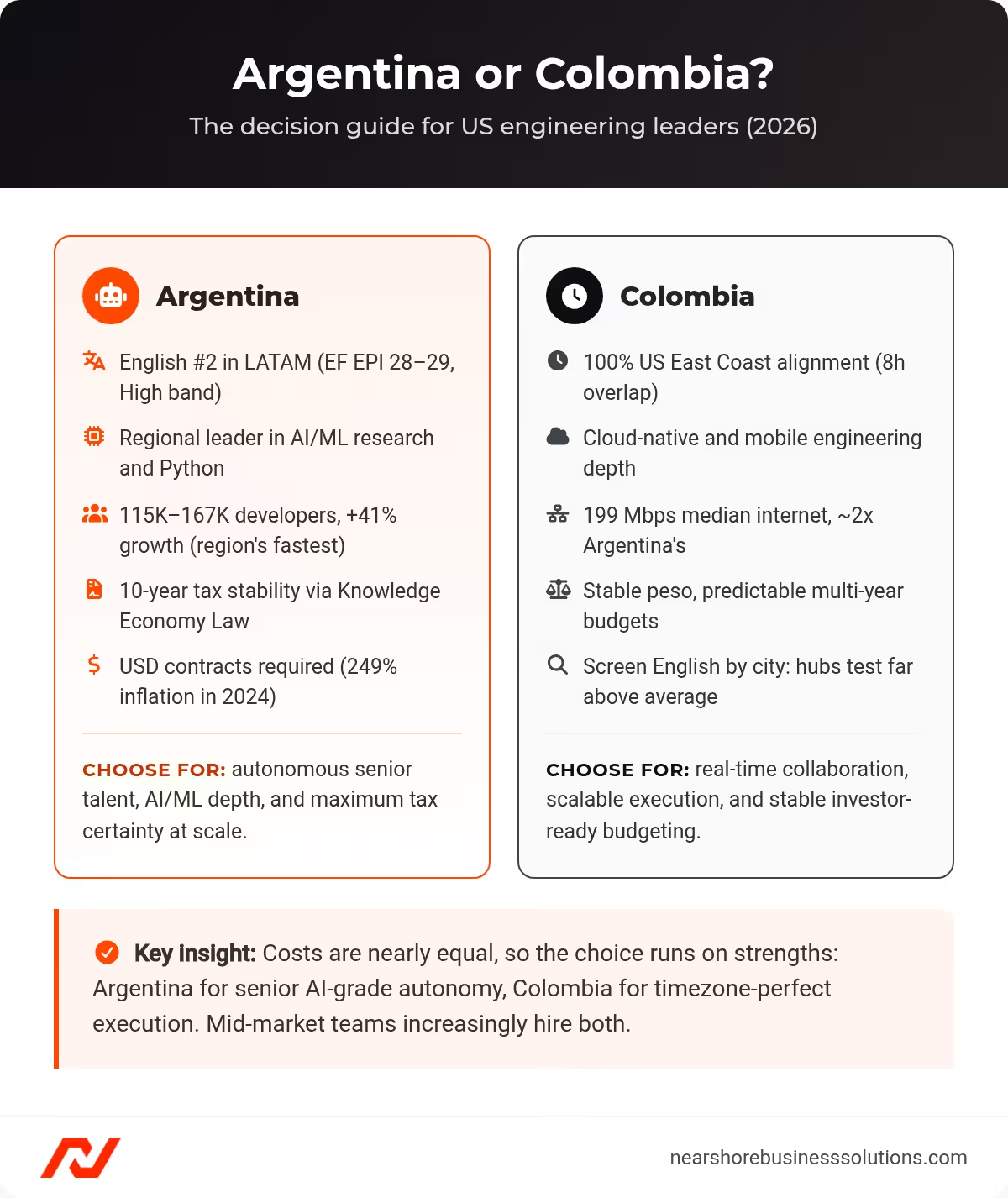
The decision guide: when to choose Argentina, when to choose Colombia.
Should Enterprise Companies Choose Argentina or Colombia for Scaling Teams?
Argentina provides access to 10-year tax stability through the Knowledge Economy Law. This fiscal certainty matters when you’re projecting costs for 50+ person teams over multi-year roadmaps. The tax savings compound significantly at enterprise scale.
Colombia offers a massive, rapidly growing talent pool concentrated in innovative hubs. The combination of Bogotá and Medellín gives you two distinct hiring markets with different salary expectations and specializations. This is useful when you’re hiring 20+ engineers annually.
A dual-hub approach leveraging both countries provides the most resilient and cost-effective expansion strategy. You gain Argentina’s tax advantages and senior technical depth plus Colombia’s timezone alignment and operational stability. Geographic diversification also mitigates country-specific risks around political changes, currency shocks, or regulatory shifts that could impact single-country operations.
Can You Hire from Both Countries for the Same Project?
Evidence suggests a dual-hub approach works best for mid-market U.S. tech firms. Use Argentina’s senior architectural talent alongside Colombia’s scalable cloud-native engineering teams.
This strategy distributes risk while capturing each country’s strengths. Argentine architects design system foundations and own complex technical decisions. Colombian engineers implement features, maintain cloud infrastructure, and handle operational tasks requiring tight U.S. coordination. The 2-hour timezone offset between countries becomes irrelevant when teams operate in specialized roles rather than requiring constant synchronous collaboration.
Frequently Asked Questions About Hiring in Argentina vs Colombia
These are the most common questions US tech leaders ask when choosing between Argentina and Colombia.
How long does it take to hire developers in Argentina vs Colombia?
Both countries support fast hiring. Through Employer of Record (EOR) services, you can hire full-time employees in 3-7 business days once candidates are selected. Contractor hiring moves even faster at 1-3 days.
What if a developer doesn’t work out?
Most nearshoring firms offer replacement guarantees. Nearshore Business Solutions provides a 90-day replacement guarantee. If a hire isn’t the right fit within that window, you can request a replacement at no additional cost.
Do I need to provide equipment for LATAM developers?
Most nearshoring arrangements include equipment provision. Your EOR or staffing partner typically covers laptops, monitors, and software licenses. Clarify equipment responsibility before hiring.
How do you manage currency volatility, especially in Argentina?
Most developers in Argentina (especially senior talent) operate under USD-based contracts to protect against inflation. Colombia offers more stable peso-based contracts. Discuss currency preference during negotiations.
What’s the difference between an EOR and direct employment?
An Employer of Record (EOR) acts as the legal employer. You hire through the EOR but manage day-to-day work. Direct employment requires establishing a local entity and handling all compliance yourself. EOR is faster and less risky.
Can I hire from both countries for the same project?
Yes, a dual-hub approach works best. Use Argentina’s senior architects for technical leadership. Use Colombia’s cloud engineers for execution. The different time zones and specializations create a balanced team.
Which country has better English proficiency?
Argentina ranks 28th-29th globally on the EF English Proficiency Index. Colombia’s national average ranks 76th-80th globally. However, Colombian developers in Bogotá and Medellín have significantly higher English than the national average.
Which Country Should You Choose Based on Your Specific Engineering Needs?
Argentina is best for companies that:
- Require high-level senior talent with global product mindset
- Prioritize high English proficiency for complex autonomous work
- Are willing to navigate macroeconomic volatility for long-term tax stability
- Focus on SaaS architecture leveraging experience from global platforms like Auth0
- Operate in EdTech where Argentina maintains strong market presence
Colombia is best for companies that:
- Prioritize perfect temporal alignment with U.S. East Coast operations
- Require frequent face-to-face interaction enabled by 5-hour flights from NYC
- Seek stable business environment with predictable cost structures
- Focus on FinTech or mobile-first applications targeting the LATAM market
- Build HealthTech solutions leveraging Medellín’s R\&D partnerships
Risk factors affect both markets. Argentina attracts 10% of cybercrime in Latin America. Colombia ranks third in the region for cyberattacks. Both countries require robust data protection protocols. Factor security infrastructure costs and compliance requirements into your total cost calculations. The savings from nearshoring diminish if you’re remediating security incidents caused by inadequate controls.
Ready to Build Your LATAM Engineering Team?
Nearshore Business Solutions connects you with vetted developers across Argentina, Colombia, and Latin America. We handle sourcing, vetting, and placement. You focus on building your product. Our developers are pre-screened for technical skills and English proficiency, with a 90-day replacement guarantee.
Get a free consultation to discuss your hiring needs and receive a custom quote.