
Brazil fields the largest, deepest, and most internationally capable finance talent pool in Latin America, 524,579 CRC-registered accountants, full IFRS convergence since 2010, and up to eight hours of daily overlap with US business hours. For CFOs at $5M–$100M ARR companies, that combination translates to 40–60% fully loaded cost savings versus US-based hires without sacrificing reporting quality or real-time collaboration. This guide delivers the salary benchmarks, compliance frameworks, sourcing strategies, and team-building models required to hire in Brazil with confidence in 2026.
Why Brazil Offers the Deepest Finance Talent Pool in Latin America for 2026
Brazil produces more finance and accounting professionals than any other Latin American country, by a wide margin. The structural advantage combines three factors no other nearshore market matches at scale: a massive credentialed talent pool, IFRS-converged accounting standards with over 15 years of practical application, and 5–8 hours of daily overlap with US business hours.
525,000+ CRC-Registered Professionals and a Growing University Pipeline
524,579 professionals hold active registrations with Brazil’s Conselho Regional de Contabilidade (CRC) system as of May 2024. São Paulo alone accounts for 154,289, nearly 30% of the national total. Minas Gerais (52,142), Rio de Janeiro (51,770), Rio Grande do Sul (39,121), and Paraná (36,112) round out the top five, offering secondary markets with lower competition and often lower salary expectations.
The university pipeline sustains this pool at scale. In 2022, Brazilian universities graduated 42,168 students with degrees in Accounting Sciences, drawn from an enrolled base of 347,758 (INEP). That annual output alone exceeds the total number of registered accountants in most Latin American countries.
Brazil’s unemployment rate for higher-education holders stood at 6.9% in Q1 2024, low enough to signal strong demand, but high enough to indicate a meaningful pool of upward-mobile talent. Deel’s 2023 survey found 72% of Latin American workers pursuing international remote roles cited higher salary as their top motivation.
> **CRC vs. US CPA:** The CRC is Brazil’s mandatory licensing framework. To qualify as a *Contador*, a candidate must complete a four-year bachelor’s degree in Accounting Sciences and pass the *Exame de Suficiência*. The exam is less extensive than the four-part US CPA exam but remains the mandatory standard for anyone practicing accounting in Brazil.Full IFRS Convergence Since 2010: Why Brazilian Accountants Are Multinational-Ready
Brazil fully converged with IFRS for publicly traded companies by 2010, following Law 11.638 in 2007. The Comitê de Pronunciamentos Contábeis (CPC) issues Brazilian standards fully converged with IFRS, CPC 06 mirrors IFRS 16 (leases), CPC 47 mirrors IFRS 15 (revenue recognition), CPC 46 mirrors IFRS 13 (fair value). A finance professional proficient in CPC standards understands IFRS principles and can transition to pure IFRS reporting with minimal ramp-up.
This dual competency, fluency in both Brazilian GAAP and IFRS, creates a distinct hiring advantage. Nubank, listed on the NYSE and backed by Sequoia Capital and Berkshire Hathaway, demonstrates what this talent pool delivers: its Brazil-based finance teams produce SEC-compliant reporting for US public markets.
Time Zone Overlap and Cultural Compatibility with US and European Finance Teams
São Paulo operates on Brasília Time (BRT, UTC-3) year-round, providing 8 hours of overlap with New York, 6 with Chicago, and 5 with San Francisco. Compare this against India (zero overlap during normal hours) or Eastern Europe (1–2 hours). Gartner’s 2022 research confirmed that nearshore time zone compatibility significantly improves team integration for synchronous processes like month-end close and M&A due diligence.
Cultural alignment starts from a strong foundation but requires calibration. Hofstede’s framework shows Brazil scoring 69 on Power Distance (vs. US 40), 38 on Individualism (vs. US 91), and 76 on Uncertainty Avoidance (vs. US 46). US managers should explicitly invite proactive participation, invest in personal rapport, and provide well-defined processes rather than ambiguous “figure it out” cultures.
What Does It Actually Cost to Hire Accountants in Brazil in 2026?
R$7,930 per month for a staff accountant in São Paulo. R$27,895 for a controller. Those base salary figures represent only part of the cost equation. Brazil’s CLT labor framework adds 65–80% on top of base salary. All figures use a BRL 5.15 to USD 1.00 exchange rate; the two-year trading range of BRL 4.75–5.50 introduces +/- 10% variability.
Base Salary Ranges by Role, Seniority, and City for Brazilian Accountants
| Role | Annual USD (São Paulo) | Monthly BRL (São Paulo) | Secondary City Discount |
|---|---|---|---|
| AP/AR Specialist | $15,000 | R$6,440 | 20–25% lower |
| Staff Accountant | $18,500 | R$7,930 | 20–25% lower |
| Senior Accountant | $28,000 | R$12,015 | 15–20% lower |
| Senior FP&A Analyst | $37,000 | R$15,880 | 15–20% lower |
| Finance Manager | $52,500 | R$22,520 | 10–15% lower |
| Controller | $65,000 | R$27,895 | 10–15% lower |
CRC-certified professionals command a 15–25% premium over non-certified candidates. For roles involving statutory reporting or tax filings, CRC certification is non-negotiable.
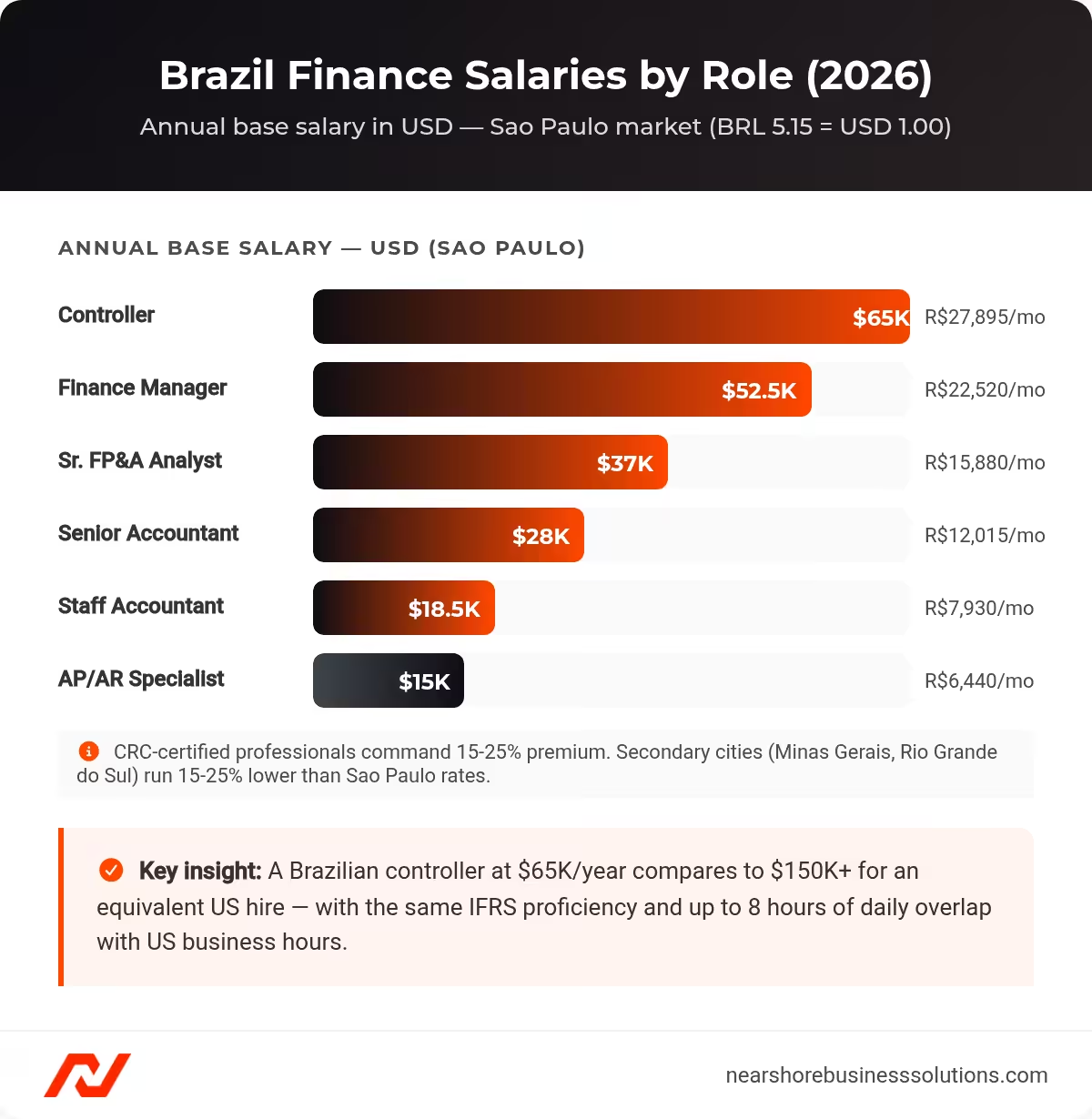
Brazil finance salaries by role in 2026 — Sao Paulo base rates in USD at BRL 5.15 exchange rate.
The True Employer Cost: INSS, FGTS, 13th Salary, and the Full CLT Burden Calculated
Using a R$12,000/month senior accountant as the worked example:
| Cost Component | Rate | Monthly BRL |
|---|---|---|
| Base Salary | – | R$12,000 |
| INSS Employer | 20% | R$2,400 |
| RAT/SAT + Sistema S | ~8.8% | R$1,056 |
| FGTS | 8% | R$960 |
| 13th Salary (prorated) | 8.33% | R$1,000 |
| Vacation + 1/3 Bonus (prorated) | 11.11% | R$1,333 |
| Transport + Meal Vouchers | Est. | R$800–R$1,200 |
| Health Insurance (midpoint) | – | R$1,160 |
| Total Employer Cost | R$20,700–R$21,100 |
Translated to USD: approximately $4,020–$4,100/month ($48,200–$49,200/year). The equivalent US senior accountant at $85,000 base with 35% benefits loading costs $114,750 annually, making the Brazilian hire 57–59% cheaper fully loaded. Scaled to a five-person team over three years, this model yields potential savings exceeding $1.3 million. Apply a 1.70–1.80x multiplier to any Brazilian base salary for true employer cost.
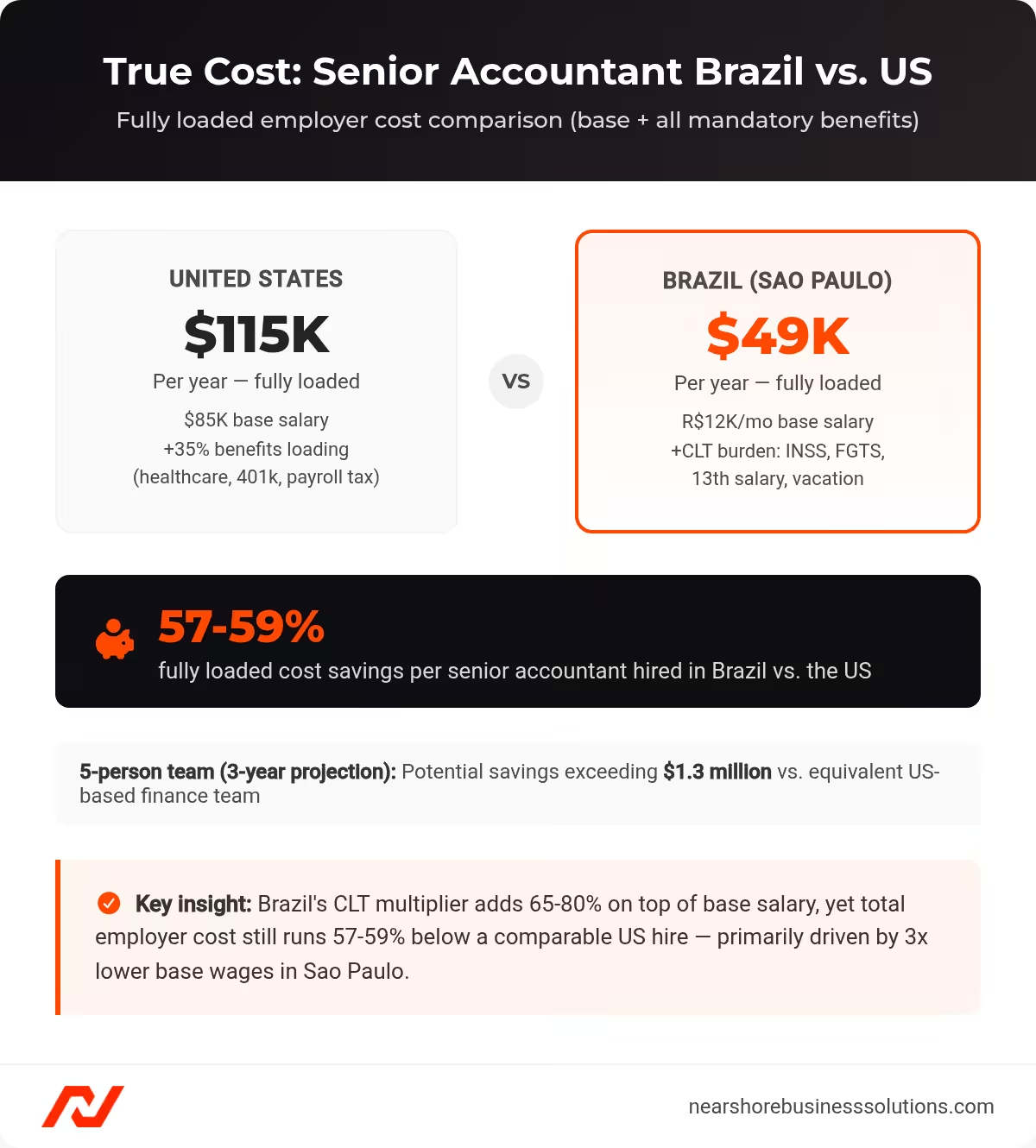
True employer cost comparison: senior accountant fully loaded in Brazil vs. the US, including all mandatory CLT benefits.
São Paulo vs. Mexico City, Bogotá, Buenos Aires, and Santiago
| City | Senior Accountant (USD/mo) | Financial Analyst (USD/mo) | EF EPI Score (2023) | Talent Pool Depth |
|---|---|---|---|---|
| São Paulo | $2,200–$3,200 | $2,500–$3,800 | 487 (Low) | Very high |
| Mexico City | $1,800–$2,800 | $2,000–$3,200 | 494 (Low) | High |
| Bogotá | $1,200–$2,000 | $1,400–$2,400 | 486 (Low) | Moderate |
| Buenos Aires | $1,000–$1,800 | $1,200–$2,200 | 560 (High) | Moderate-high |
Buenos Aires offers the lowest costs and highest English proficiency, but Argentina’s 200%+ annualized inflation makes budgeting unpredictable. São Paulo’s 15–25% premium over Mexico City reflects unmatched pipeline depth and shared services infrastructure. For teams of five or more, São Paulo’s scaling advantages outweigh lower unit costs elsewhere.
For a broader comparison across the region, see Latin America Hiring Guides.
How Do You Find and Vet Qualified Financial Analysts in Brazil?
Average time-to-hire for a financial analyst in Brazil runs 35 days versus 48 in the US (LinkedIn Talent Insights, 2023). The challenge is identifying candidates with English fluency, IFRS depth, and cross-border communication skills. Senior analysts in São Paulo are overwhelmingly passive candidates at multinationals or Big Four firms, they must be found, not posted to.
Ranked Sourcing Channels: Where Brazil’s Best Finance Talent Actually Searches for Roles
| Rank | Channel | Best For | Candidate Type | Relative Cost |
|---|---|---|---|---|
| 1 | LinkedIn Recruiter | Senior analysts, controllers | Passive | High |
| 2 | Referral networks | All levels | Passive | Low |
| 3 | Specialized recruiters (Robert Half, Michael Page) | Senior specialists | Passive | High (20–25% of salary) |
| 4 | Nearshore partners (NBS) | All levels, team builds | Both | Moderate |
| 5 | Catho | Mid-level analysts | Active | Moderate |
| 6 | University career centers (FGV, USP, Insper) | Junior analysts | Active | Low |
Explore pre-vetted financial analyst profiles for candidates ready to interview within 72 hours.
A 3-Stage Technical Screening Framework for Brazilian Financial Analysts
EF EPI 2023 ranks Brazil 70th out of 113 countries at “Low Proficiency”-but this masks a self-selecting cohort within finance operating at B2–C1 English, driven by years inside multinationals.
Stage 1 – Resume and Credential Screen (eliminates 60–70%): Verify active CRC Contador status via regional CRC portals. Confirm MEC-accredited university credentials (prioritize FGV, USP, Insper, PUC, Unicamp, UFMG). Check for CFA designation (2,568 Brazilian members as of 2023)-treat as a positive differentiator, not a requirement. Assess English signals: LinkedIn activity language and prior international employer history. Watch for title inflation, verify scope (entities consolidated, budget size) rather than title alone.
Stage 2 – Technical Case Assessment (2–3 hours): Financial modeling exercise (DCF or 3-statement model). IFRS/CPC reporting scenario testing CPC 06/IFRS 16 or CPC 47/IFRS 15 application. ERP proficiency check, SAP FI/CO or TOTVS Protheus (dominant in Brazilian mid-market; candidates with only TOTVS need 4–6 weeks to transition to SAP or NetSuite). Excel and Power BI practical test including DAX proficiency for advanced candidates.
Stage 3 – Live Interview: 45–60 minute video interview combining behavioral questions with a walkthrough of Stage 2 work. Assess English fluency under real-time pressure and the ability to explain technical decisions to non-technical stakeholders, critical for finance professionals embedded in cross-functional US teams.